
Bridge Notes #19: September's Best-Funded Crypto Startups Hid the Crypto
September's crypto VC rebound was real, but the money chased stablecoin fintechs that hide the chain from users. Why the invisible bridge is now the fundable one.
Bridge Notes #18: Tokenized Collateral Is the Bridge That Carries Weight
The CFTC quietly made tokenized money-market fund shares eligible as derivatives margin on September 24. Trading venues get the headlines, but collateral is where tokenization turns into plumbing.

Bridge Notes #17: Congress Said No on Monday. The SEC Said Yes on Wednesday.
The Senate killed the CLARITY Act on September 15. Two days later the SEC opened onchain equity trading by exemptive relief — permissioned, temporary, and carrying an issuer veto. What that swap actually costs founders.

Bridge Notes #16: Seven Banks Just Paid to Build Their Own Rail. Read the Cap Table, Not the Press Release.
In early September 2026, tokenized deposit network Cari raised $32.5 million with no venture fund on the cap table — seven US banks wrote the whole round. That structure tells you more about where bank money is going on-chain than any stablecoin forecast.

Bridge Notes #15: Three Rulebooks Just Banned Stablecoin Yield. The Yield Moves One Wrapper Over.
On September 1, 2026, Singapore proposed banning interest on stablecoins, matching the GENIUS Act and MiCA. Outlawing the wrapper doesn't outlaw the demand for yield — it relocates it, and the relocation is where the next set of businesses gets built.
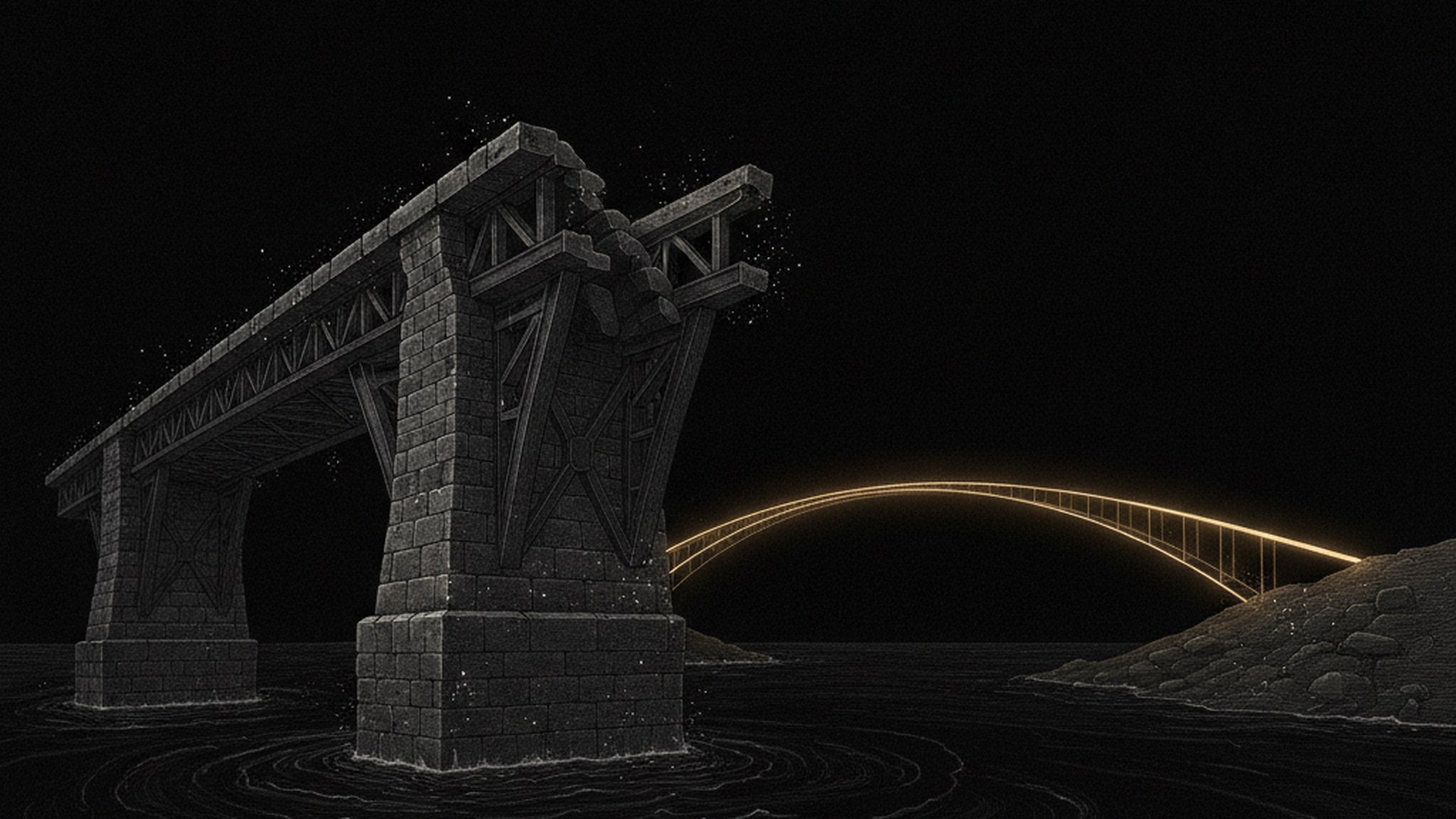
Field Notes #5: The Senate Left Town Without CLARITY. The Bridge Got Built Anyway.
The Senate filed cloture on the CLARITY Act on August 8 and then went home. Founders read that as a closed gate. A field note on why the regulatory bridge they were waiting for already exists — and what it costs you that it's guidance, not statute.
Bridge Notes #14: Crypto Raised $8.8B in Three Weeks. Founders Got About 1% of It.
Between August 1 and August 22, 2026, crypto funding trackers reported roughly $8.8 billion. Primary venture rounds into actual Web3 companies came to about $93 million. The gap is the story.

Bridge Notes #13: Founders Chose RWA Over DeFi. The Cap Table Explains Why.
RWA passed DeFi as the sector Web3 founders choose in 2026 — 29% versus 23%. The number that matters more is the one underneath it: 83% of founders now want equity in the raise, not a token-only deal.

Bridge Notes #12: Robinhood Built Its Own Chain. The Number That Matters Isn't 240,000.
On July 21 Robinhood said its new chain added 240,000 stock-token holders in a month. The number that tells you whether the composability bridge got built is far smaller — and it's the one nobody put in the headline.
Bridge Notes #11: AI Agents Have Two Ways to Pay. The Bridge Between Them Is the Business.
In June 2026 Mastercard, Visa and Coinbase all shipped ways for AI agents to pay. The press calls it cards versus stablecoins. I think the real prize is the layer that bridges both rails.

Bridge Notes #10: When Brokerages Tokenize Stocks, the Token Still Has to Do Something
Coinbase launched 1:1 tokenized U.S. stocks on June 16. Robinhood and Interactive Brokers followed. Issuance is now table stakes — composability is the bridge nobody's finished building.

Field Notes #4: The Week the Card Networks Started Issuing Stablecoins
Stripe, Visa, and Mastercard are close to launching a joint stablecoin platform. A field note on what the incumbents co-opting the rail means for founders building payment infrastructure.

Bridge Notes #9: Crypto Venture Funding Just Split in Two
In 2026 crypto venture funding split in two: a handful of mega-funds writing nine-figure checks, and a starving long tail raising under $2M from angels. The bridge between them runs straight through revenue.

Bridge Notes #8: What Two Decades of Operating Taught Me About Web3 Adoption Cycles
I've lived through enough Web3 cycles to see the same three patterns repeat. In 2026, two of them are running on schedule. The third has changed shape — and most of the market is still pricing the old version.

Bridge Notes #7: Verifiable Inference Is the Trust Layer Decentralized AI Has Been Missing
Decentralized AI talks a lot about compute and not enough about proof. Verifiable inference and zkML are the trust layer the category has been missing — and the protocols building it are the ones I'd back into 2027.

Bridge Notes #6: Intent-Based DeFi Won the Orderflow War. Now What?
Intents quietly won the DeFi orderflow war. UniswapX, CoW, Across, 1inch Fusion route a majority of retail volume. The interesting question for 2026 isn't whether intents won — it's what compounds on top.

Field Notes #3: Two Decentralized-AI Founders, One Question Neither Could Answer
Two decentralized-AI founders in one week. Different categories, different traction, different teams. Same blind spot — the question neither could answer about model dependency.

Bridge Notes #5: DePIN's Quiet Quarter and the Compute-vs-Telco Split
Compute DePIN and telco DePIN look similar on a slide. The unit economics tell you they're two completely different businesses — and the winners, timelines, and capital needs don't compose.

Bridge Notes #4: The Tokenized Money-Market Fund Flippening Is Quieter Than It Looks
Tokenized money-market funds quietly crossed $10B in 2026. The shift in what 'crypto rates' means — and what that does to stablecoins, treasuries, and DeFi yield — is the most underpriced story in RWA right now.

Field Notes #2: What Allocators Are Asking Me This Week
Four LP calls in five days. The questions allocators are asking in Q2 2026 are nothing like the ones from last spring. What's changed — and what it tells you about how Web3 capital is being underwritten now.

Bridge Notes #3: Why Restaking's Second Act Looks Nothing Like Its First
EigenLayer crossed $20B, then ate itself. The second act of restaking isn't a TVL race — it's a yield-attribution problem. The protocols I'm watching now look nothing like the ones that won the first.
Bridge Notes #2: AI x Web3 Isn't One Market — It's Three
The AI x Web3 thesis gets pitched as one trade. In 2026 it's three different markets with three different unit economics. I've been wrong about which one matters most — here's where I've landed.

Field Notes #1: Three DePIN Pitches I Took This Week
I took three DePIN pitches in 72 hours. None of the decks looked alike. What they shared — and what I almost missed — is what I'm taking into next week's calls.

Bridge Notes #1: The Three Bridges Tokenized RWAs Still Have to Cross
Tokenized real-world assets crossed $17B in early 2026. The three bridges that actually decide whether this becomes infrastructure or stays a press cycle are liquidity, regulation, and settlement — and only one is half-built.